
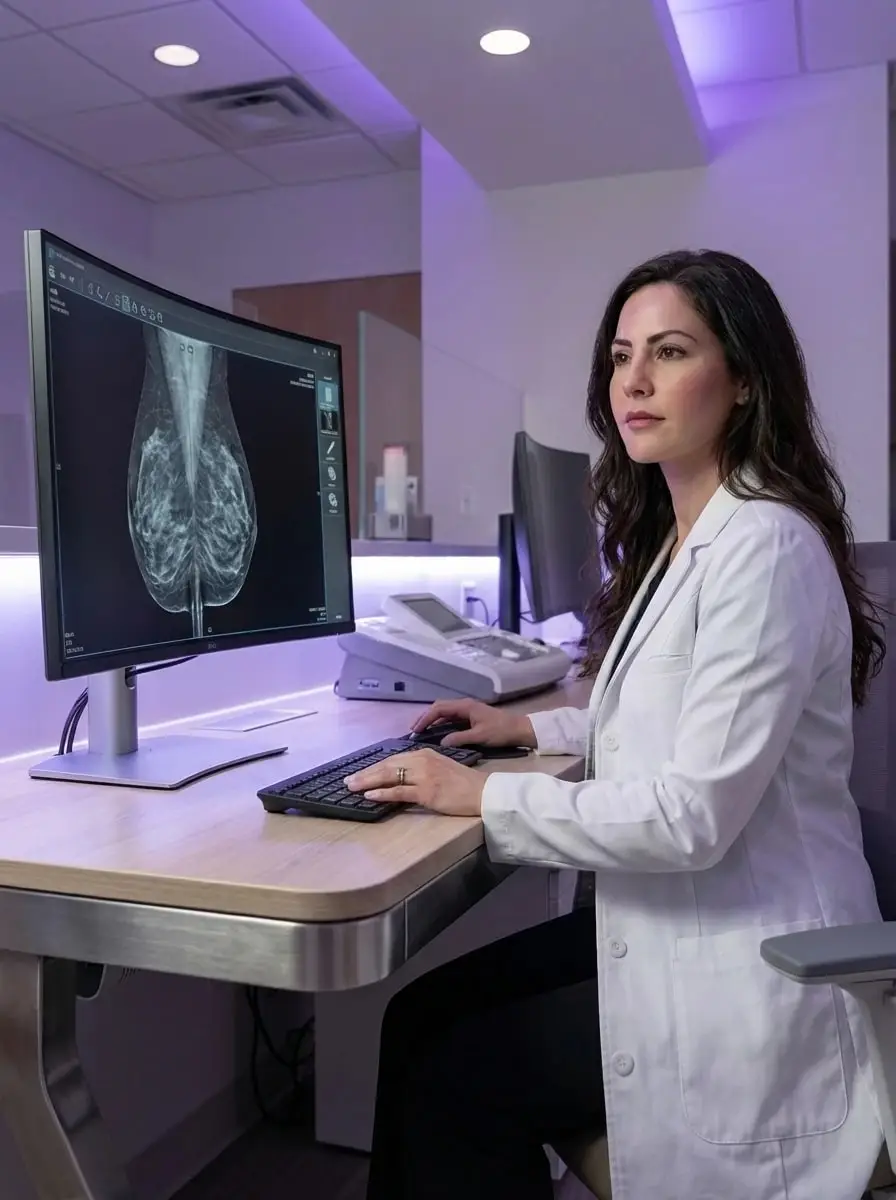
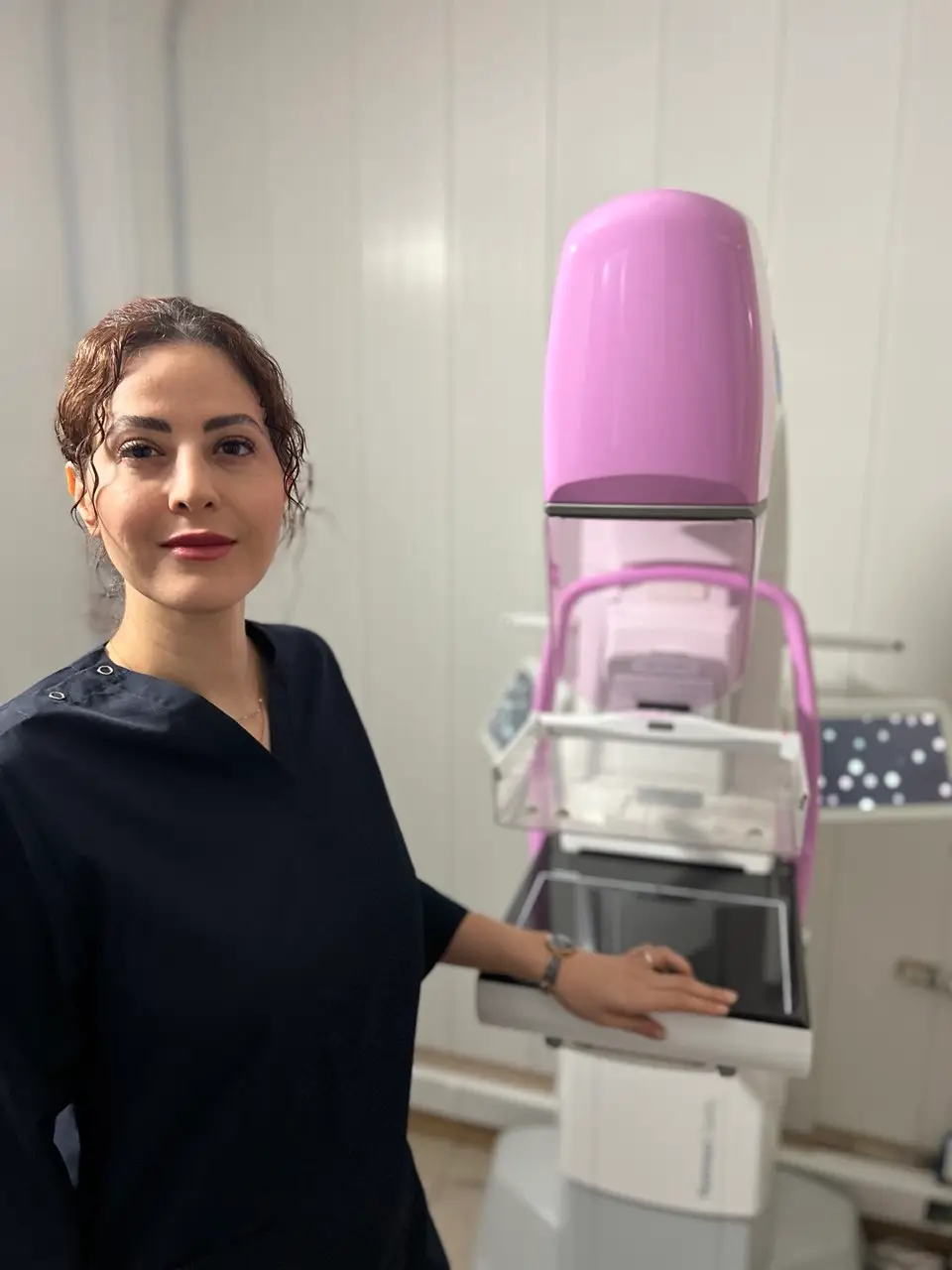



Mammography is a powerful screening tool, but interpretation is not always definitive. Some findings fall into clinical gray zones where experience and judgment significantly influence conclusions.
Categories such as BI‑RADS 3 and BI‑RADS 4 include a wide range of imaging appearances. In these situations, different radiologists may reasonably arrive at different recommendations when reviewing the same images.
Radiologists who focus specifically on breast imaging evaluate large volumes of mammograms each year. This focused exposure helps in recognizing subtle patterns and distinguishing findings that require intervention from those appropriate for follow‑up.
- Some findings benefit from reassessment rather than urgency
- Independent review can confirm or refine the next step
- Clarity supports calmer, more confident decision‑making
Seeking a second opinion does not delay care. It helps ensure that decisions are guided by clarity rather than uncertainty.