

What Does a Large Bright White Spot on a Mammogram Mean?
On a mammogram, areas that appear bright white are usually described as radiopaque or dense. This appearance can happen for many reasons, and the meaning depends on the shape, borders, location, and whether the area is new or stable over time.
A “large bright white spot” is not a formal diagnosis. It is a visual description. Radiologists look at the entire pattern, not just the brightness itself.
Why White Areas Appear on Mammograms
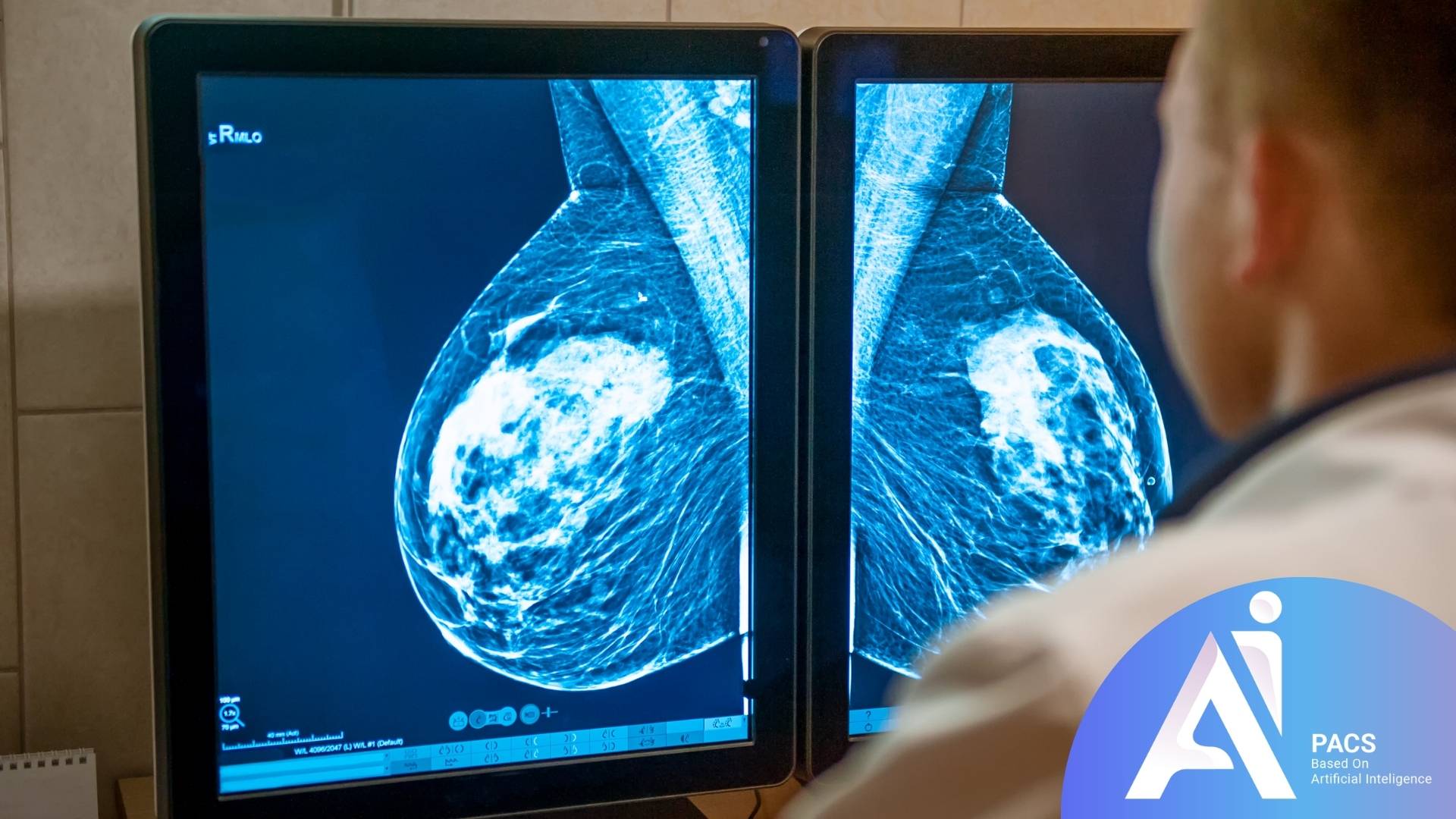
Breast tissue and certain findings absorb X-rays more strongly and therefore look white on mammography. Common examples include:
- Dense fibroglandular tissue
- Benign calcifications
- Cysts with dense contents
- Fibroadenomas
- Scar tissue
- Postsurgical changes
- Some cancers, which can also appear as a white mass or dense area
If findings are complex, using AI PACs Mammogram Second Opinion Service can provide additional reassurance and expert review.
Common Causes of Large Bright White Spot on a Mammogram
1. Dense Breast Tissue
Breasts with more glandular and fibrous tissue naturally look whiter on mammography. Dense tissue is common and normal, especially in younger women.
Why it matters: Dense tissue can make interpretation harder because both normal tissue and some abnormalities appear white.
2. Benign Masses
Some non-cancerous breast lumps can appear white, including:
- Fibroadenomas
- Cysts with proteinaceous or dense fluid
- Hamartomas
- Fat necrosis
These are often well-defined and may be stable on prior imaging.
3. Calcifications
Calcium deposits may appear as small white spots or clusters. Some calcifications are harmless, while others require closer evaluation.
Radiologists pay attention to:
- Size
- Distribution
- Shape
- Whether they are grouped or scattered
4. Scar Tissue or Prior Injury
If you have had:
- breast surgery,
- biopsy,
- trauma,
- infection,
then scar tissue or fat necrosis can create a white area on a mammogram.
5. Breast Cancer
A cancerous lesion may sometimes appear as a bright white mass, especially if it is dense or associated with calcifications or architectural distortion.
Features that may increase concern include:
- Irregular shape
- Spiculated or poorly defined margins
- Associated distortion
- New appearance compared with prior imaging
How Radiologists Decide Whether It Is Concerning
Radiologists use several clues:
- Margins: smooth vs irregular
- Shape: round, oval, or irregular
- Density: how white the finding is
- Location: one breast or both, superficial or deep
- Stability: unchanged over time or new
- Associated findings: calcifications, distortion, skin thickening, enlarged lymph nodes
They then assign a BI-RADS category, which helps guide the next step.
BI-RADS Categories in Simple Terms
- BI-RADS 0: More imaging needed
- BI-RADS 1–2: Normal or benign
- BI-RADS 3: Probably benign, short-term follow-up
- BI-RADS 4: Suspicious, biopsy may be recommended
- BI-RADS 5: Highly suggestive of cancer
Read for more information: What Does BIRADS Mean in Mammography?
What Are the Risks?
The risk depends on the underlying cause, not the brightness alone.
Lower-Risk Situations
The finding is more likely benign when:
- it has smooth borders,
- it has been unchanged for years,
- it matches a known cyst or fibroadenoma,
- you have prior surgery or trauma in the same area.
Higher-Risk Situations
Concern is higher when the area:
- is new,
- is growing,
- has irregular borders,
- is associated with suspicious calcifications,
- is paired with skin changes or nipple changes.
Even then, many suspicious findings still turn out to be benign after follow-up or biopsy.
What Happens Next?
1. Compare With Prior Mammograms
If older mammograms are available, comparison is one of the most important steps. A stable finding is often reassuring.
2. Additional Mammogram Views
The radiology team may recommend:
- spot compression views,
- magnification views,
- extra angled views.
These help clarify whether the finding is a real mass, overlapping tissue, or calcification pattern.
3. Breast Ultrasound
Ultrasound is often used to determine whether the white area corresponds to:
- a solid mass,
- a simple cyst,
- or a complex lesion.
4. Breast MRI in Selected Cases
MRI may be recommended in some patients, especially if:
- mammogram and ultrasound are unclear,
- the breasts are very dense,
- there is high genetic or clinical risk,
- there are symptoms that need further evaluation.
5. Biopsy if Needed
If imaging suggests a suspicious lesion, your doctor may recommend a biopsy to obtain a tissue diagnosis. This is the most definitive way to determine what the spot is.
Scientific Explanation Made Simple
Mammography works by sending low-dose X-rays through the breast. Different tissues absorb X-rays differently:
- Fat appears darker.
- Fibrous, glandular, calcified, or tumor tissue often appears whiter.
A “large bright white spot” may therefore represent anything from normal dense tissue to a benign lump or a malignant mass. Imaging interpretation focuses on pattern recognition and comparison, not color alone.
Practical Advice for Patients
What You Should Do
- Keep your follow-up appointment.
- Bring any prior breast imaging from other facilities.
- Ask for the exact BI-RADS category.
- Ask whether the finding needs ultrasound, repeat mammography, or biopsy.
- If you have symptoms such as a palpable lump, nipple discharge, skin dimpling, or breast redness, tell your clinician.
What Not to Do
- Do not assume the worst from the wording alone.
- Do not ignore a callback.
- Do not delay follow-up imaging if it was recommended.
Helpful Questions to Ask Your Doctor
- Is this finding likely benign or suspicious?
- Has it changed compared with prior scans?
- Do I need ultrasound or biopsy?
- What BI-RADS category was assigned?
- When should I return for follow-up?
Latest Scientific Findings (2020–2025)
1. Radiology (2024)
A large multicenter study showed digital breast tomosynthesis improves detection of invasive cancers while reducing false positives.
2. JAMA Oncology (2023)
Study confirmed early detection via mammography significantly reduces breast cancer mortality.
3. Radiology (2022)
Research demonstrated that AI-assisted mammography improves detection of subtle white masses in dense breasts.
4. The Lancet Oncology (2021)
Analysis showed that screening programs reduce late-stage diagnoses by over 20%.
5. AJR (2020)
Study highlighted that structured BI-RADS reporting improves diagnostic accuracy and reduces unnecessary biopsies.
These findings reinforce that careful evaluation of a large bright white spot on mammogram leads to better outcomes and fewer unnecessary procedures.
Conclusion
A large bright white spot on a mammogram is a descriptive imaging finding, not a diagnosis by itself. It may reflect dense tissue, a benign lesion, calcification, scar tissue, or—less commonly—a suspicious mass. The most important next step is to follow your radiologist’s recommendation for additional imaging or biopsy if needed. Most patients benefit from a careful, stepwise evaluation rather than immediate alarm.
Scientific References
- RadiologyInfo.org – Mammography overview and BI-RADS explanation.
- NIH / National Cancer Institute (NCI) – Breast density and breast cancer screening information.
- MedlinePlus – Mammogram interpretation and breast imaging basics.
- Mayo Clinic – Breast lump and mammogram follow-up guidance.
- Cleveland Clinic – Dense breasts and breast imaging education.
- FDA – Dense breast notification and screening information.
- PubMed – Recent peer-reviewed studies on mammographic density, screening performance, and AI assistance.