Articles
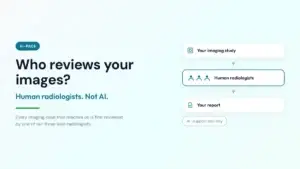
Who reviews your images?
Read More »
Human physicians do. Our name is AI-PACS, so this is the first thing we want you to know: AI does not interpret your imaging study

Human physicians do. Our name is AI-PACS, so this is the first thing we want you to know: AI does not interpret your imaging study

Key Takeaways Yes — CT is the first-line imaging test for pancreatic cancer, detecting roughly 85–95% of tumors when a dedicated “pancreatic protocol” CT is
What Is a Mammogram vs 3D Mammography (Tomosynthesis)? A mammogram is a specialized, low-dose X-ray of the breast used to screen for and diagnose breast

Key Takeaways Yes — a CT scan can show a herniated disc, but it is less sensitive than MRI for soft-tissue detail. CT excels at

What Is an Abnormal Mammogram? An abnormal mammogram identifies a finding that needs assessment, such as a mass, calcifications, distortion, or asymmetry. The word “abnormal”

What Is Dense Breast Tissue? Breast density describes the proportion of fibrous and glandular tissue compared to fatty tissue in your breasts. It is not

What Does a Large Bright White Spot on a Mammogram Mean? On a mammogram, areas that appear bright white are usually described as radiopaque or

Understanding Mammogram Results A mammogram is a low-dose X-ray test used to look for breast changes before they can be felt. It is one of

What Does “Suspicious Finding” on a Mammogram Mean? When you receive a mammogram report mentioning a “suspicious finding,” it can understandably cause worry. However, this

Magnetic Resonance Imaging (MRI) is a powerful diagnostic tool that uses magnetic fields and radio waves to create detailed images of the body’s organs and